SUBJECT: INSTITUTIONAL OPACITY AHEAD OF KUMBH MELA ON HEXAVALENT CHROMIUM POLLUTION IN NASHIK
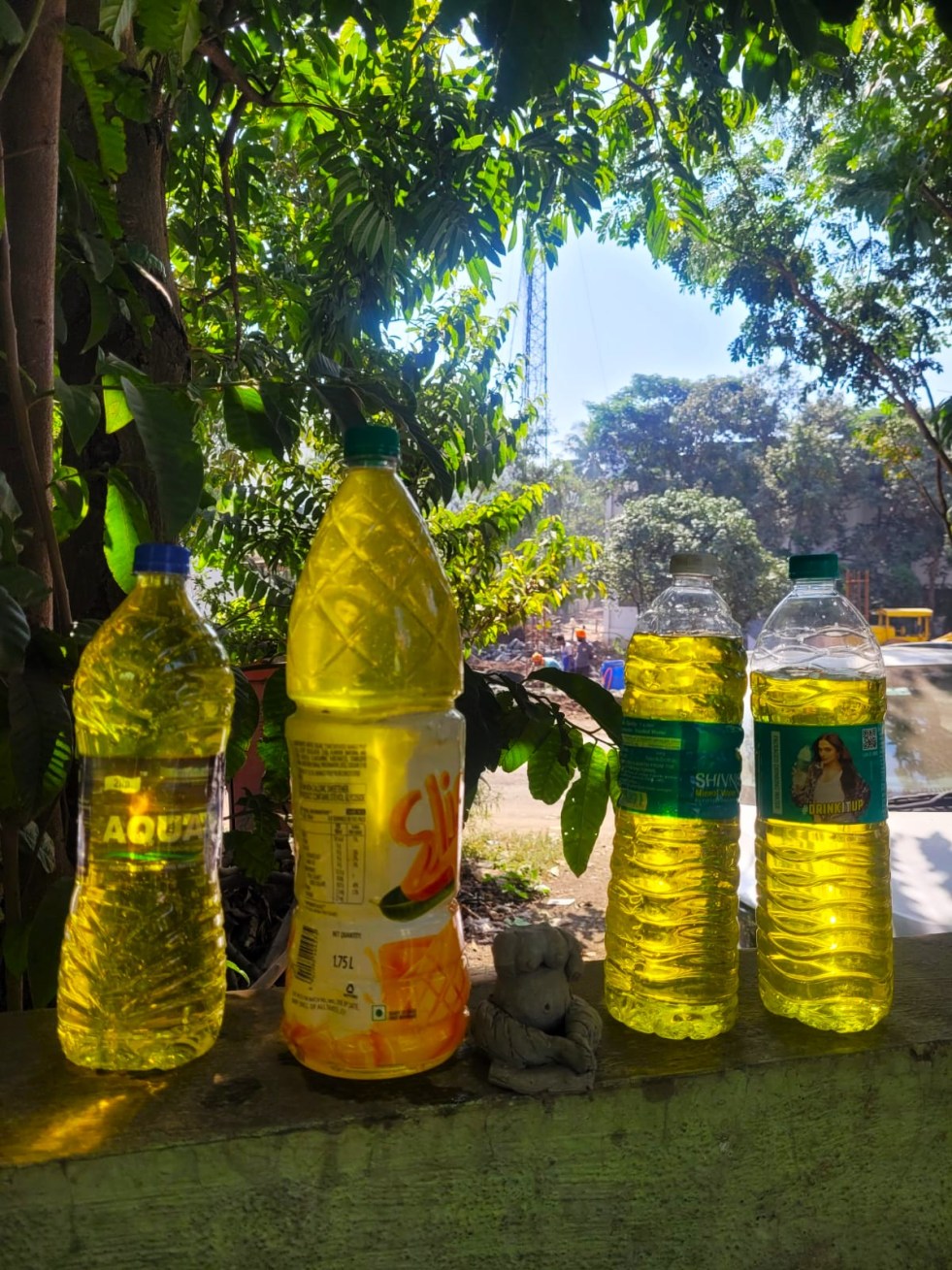
Four weeks have elapsed since the Maharashtra Pollution Control Board (MPCB) and the Nashik Municipal Corporation (NMC) were formally notified of acute industrial chemical contamination in the groundwater of Ambad (Dattanagar / Maruti Sankul).
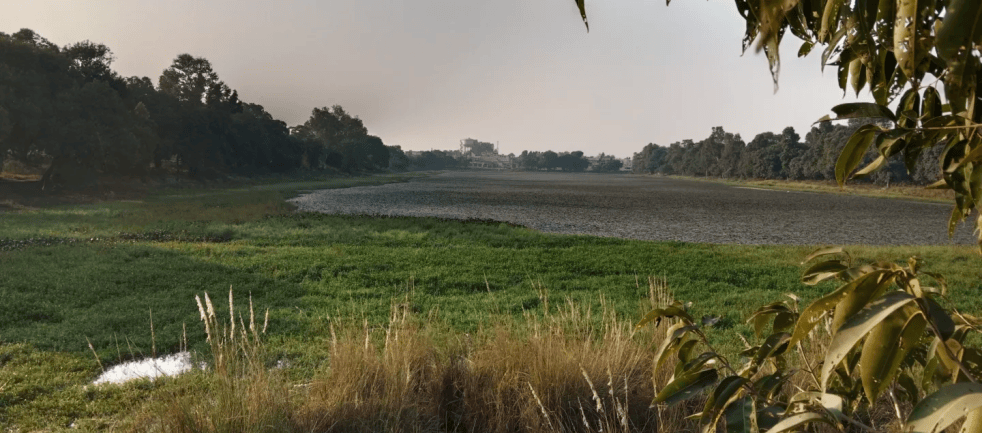
(Feature Image: Giri taal in Kashipur lying in degraded condition. Bhim Singh Rawat, SANDRP)
The latest directions of the Supreme Court of India offer hope for wetland conservation but also raise serious concerns about the state of their protection. It is welcome that the apex court has recognized the water bodies as vital sources of drinking water and affirmed that their protection falls within the ambit of the fundamental right to life.
Importantly, the Court has clarified that the ground-truthing exercise must go beyond notified wetlands and cover all, including smaller water bodies with area less than 2.25 hectares as identified in existing atlases. The Court has directed all States and Union Territories to complete this exercise within four months using scientific methods, satellite imagery, revenue records and physical boundary pillars.
However, the fact that this exercise remains incomplete fifteen years after publication of the National Atlas of Wetlands and nine years after the Wetlands (Conservation and Management) Rules, 2017 is deeply concerning. Despite the matter being heard by the Supreme Court several times including for the last two years, progress has remained very slow. This delay clearly points towards lack of any will for an accountable and transparent wetland governance system in the country. Despite the 2017 Rules (and earlier 2010 rules) and repeated judicial interventions, questions remain about the existence of or effective functioning of State Wetlands Authorities and their performance in protecting the water bodies under their jurisdiction.
While the Central Govt appears to focus more on increasing the number of Ramsar sites, many of the designated Ramsar wetlands face pollution, encroachment, urbanization and other threats that require urgent action. Similarly, thousands of other water bodies under the jurisdiction of State Govts are under threats often due to administrative failures and development projects undertaken by govt agencies themselves.
Amid this, the Supreme Court’s directions offer an opportunity to strengthen wetland protection if it is taken to logical conclusion in time bound manner. The Central and State govts must now act with urgency, transparency and accountability to complete the ground-truthing exercise within the stipulated timeline and ensure that identified water bodies are actually protected. We hope the apex court will ensure this and also ensure a transparent and accountable wetlands governance is put in place.
WETLANDS, LAKES, WATER BODIES
Complete wetland ground-truthing exercise in 4 months: SC The Supreme Court on Oct. 12, directed states to expedite the ground-truthing of wetlands, as required under the Wetlands (Conservation and Management) Rules, 2017. The court granted states four months to complete the exercise. It emphasized that the ground-truthing exercise must cover not only wetlands but also other waterbodies. These waterbodies must be identified, specified and marked in the reports. The Supreme Court referred to its August 19, 2025, order, which stated that wetlands smaller than 2.25 hectares must also be identified in accordance with the existing rules.
The court had directed state governments and wetland authorities to explain, through affidavits, the measures taken or being taken to protect these smaller wetlands, estimated to number around 555,557 according to the Wetland Atlas.
The court also pointed out that Rule 7(1)(a) of the Wetlands (Conservation and Management) Rules, 2017, requires the concerned department of a state government or Union Territory administration to prepare a brief document for each wetland identified for notification within one year of the rules being published. These documents must include the details specified under clauses (a) to (g) of Rule 7(1). However, the court noted that states had failed to complete this exercise.
It was for this reason that the Supreme Court had issued directions and orders on December 11, 2024; August 19, 2025; October 7, 2025; October 28, 2025; and July 28, 2026. The court observed that even 9 years after the rules were published, the exercise had not been completed. It directed states to file affidavits within four weeks, detailing the status of the ground-truthing exercise, including the identification and assessment of other waterbodies.
The SC has said courts cannot ignore the consequences of precious water bodies remaining unprotected and directed all states and relevant authorities to physically verify and demarcate wetlands. A bench of Justices Aravind Kumar and Vipul M Pancholi said water bodies are sources of drinking water and fall within the scope of the right to life guaranteed under the Constitution. “This Court cannot remain a mere spectator or be unmindful of the consequences flowing from water bodies remaining unprotected,” the bench said.
The court reiterated its directions to states and Wetland Authorities to carry out physical ground verification, also referred to as ground-truthing, of water bodies if the exercise had not already been completed. It asked them to file compliance affidavits explaining the method adopted for the exercise.
The court was hearing a public interest litigation filed by bird enthusiast Anand Arya, advocate M K Balakrishnan and NGO Vanashakti. It has given states and Wetland Authorities four months to complete the physical verification and demarcation of water bodies and submit details of the process.
The court directed states to adopt the scientific methodology demonstrated by Tamil Nadu, which includes satellite image verification, reconciliation with revenue records and physical installation of boundary pillars. Taking on record Karnataka’s compliance affidavit that listed 14,936 wetlands of which 14,355 had already been ground-truthed and demarcated, the bench ordered the state to place complete documentation—detailing the mode, manner and supporting records of the exercise—within four weeks. All other states and wetland authorities have been directed to undertake the same exercise forthwith, if not already done, and file affidavits within four weeks explaining the method adopted.
Referring to Rule 7(1)(a) of the Wetlands (Conservation and Management) Rules, 2017, the court clarified that the exercise is not limited to notified wetlands but must cover all water bodies, including those smaller than 2.25 hectares identified in existing atlases. The court directed states to adopt the scientific methodology demonstrated by Tamil Nadu, which includes satellite image verification, reconciliation with revenue records and physical installation of boundary pillars.
All other states and wetland authorities have been directed to undertake the same exercise forthwith, if not already done, and file affidavits within four weeks explaining the method adopted. The entire process must be completed within four months. Next hearing on Nov 16 2026.
Mangrove sediments harbour microbes that degrade organic pollutants Along the banks of Goa’s Mandovi estuary, the roots of mangroves shelter aquatic life and trap sediments. The sediments foster microbes that break down persistent organic pollutants discharged into the river from industries and domestic sources, a research team at the National Institute of Oceanography in Goa has found.
RAMSAR WETLANDS
Sauj Jheel is UP’s 14th Ramsar Site Sauj Jheel is a shallow lake surrounded by farmland in the floodplain of the Ganga and is close to Saman Bird Sanctuary in Mainpuri district, another Ramsar Site declared on December 2, 2019. Earlier on June 5, Ballia’s Surha Tal was declared a Ramsar Site. The designated wetlands in UP include the Upper Ganga River (spanning Hapur, Bulandshahr, Sambhal and Amroha districts), Nawabganj Bird Sanctuary (Unnao), Sarsai Nawar Lake (Etawah), Samaspur Bird Sanctuary (Rae Bareli), Sandi Bird Sanctuary (Hardoi), Saman Bird Sanctuary (Mainpuri), Parvati Arga Bird Sanctuary (Gonda), Sur Sarovar Bird Sanctuary (Agra), Haiderpur Wetland (Muzaffarnagar), Bakhira Bird Sanctuary (Sant Kabir Nagar), Patna Bird Sanctuary (Etah), Shekha Jheel Bird Sanctuary (Aligarh) and JP Narayan (Surha Tal) Bird Sanctuary (Ballia). The total area covered by these Ramsar sites in the state is 43,147.15 hectares, which constitutes approximately 3.47% of the state’s total wetland area of 1,242,530 hectares (according to the National Wetland Atlas).
Thane road near Ramsar site gets go-ahead The Maharashtra Coastal Zone Management Authority (MCZMA) sent the project back in August, asking the Mumbai Metropolitan Region Development Authority (MMRDA) to look for an alignment that would do less damage to the mangroves and the sanctuary’s eco-sensitive zone (ESZ). The MMRDA said there wasn’t one. On Sept 24, at its 202nd meeting, the MCZMA cleared the project with the alignment unchanged, subject to compliance with Coastal Regulation Zone (CRZ) rules.
The affected mangroves are spread over 12 hectares in the ESZ, the protected buffer around the sanctuary. The sanctuary is an internationally recognised Ramsar site. “The alignment is situated between the existing developments on the west side and the creek on the east side, resulting in no alternative alignment which can save the mangroves in a substantial manner,” the MMRDA told the MCZMA.
The TCR-2 is a 7.129-km greenfield road along Thane Creek, running from Anand Nagar in Mulund East to Balkum in Thane. It extends the Thane Coastal Road-1 and will connect directly to the proposed Kopri-Patni bridge and the Eastern Express Highway extension.
The MCZMA nod is one of several the project needs. It must still be cleared by the ESZ committee, the Union Ministry of Environment, Forest and Climate Change, and the Bombay High Court.
HYDRO POWER PROJECTS
PIB on Pump Storage Projects in India The Central Electricity Authority (CEA) projects 73.93 GW of storage capacity by 2031–32. This includes 26.69 GW from Pumped Storage Projects (PSPs) and 47.24 GW from Battery Energy Storage Systems (BESS). As of August 2026, India has 7.43 GW of operational PSP capacity across 10 projects. A further 15.87 GW across 11 PSPs is under construction and/or under implementation across the country. 10.40 GW across 8 projects has been concurred or appraised by the Central Electricity Authority.
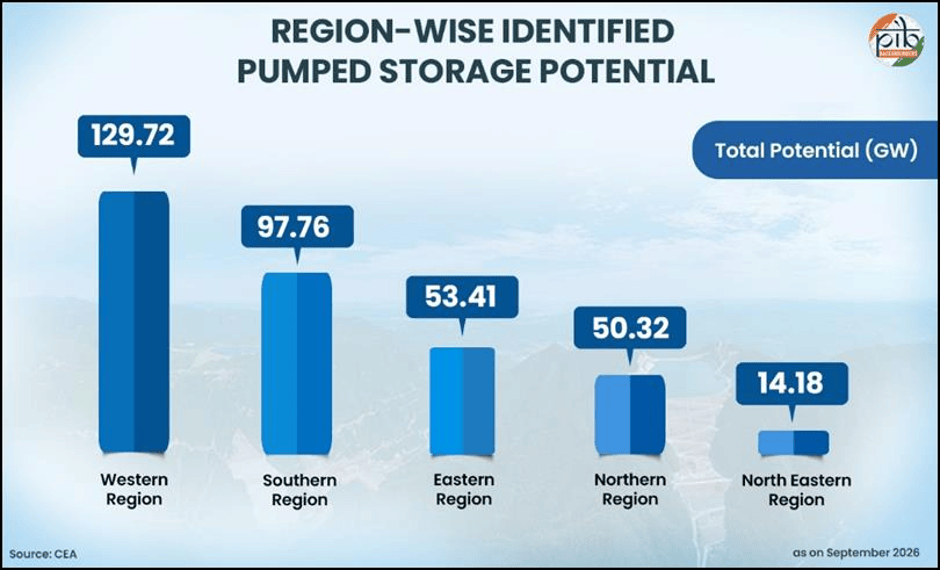
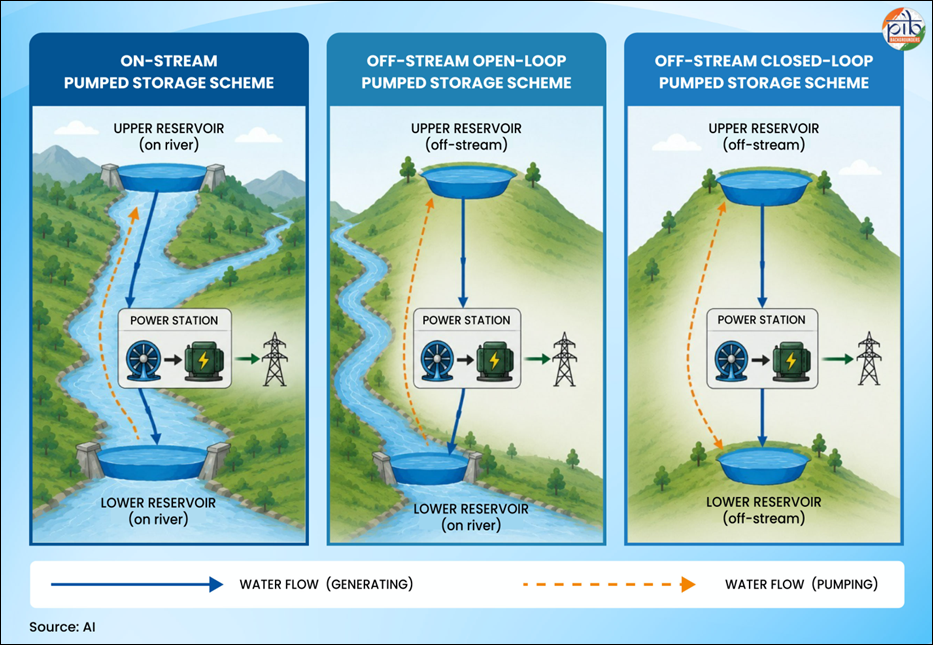
India has identified 320 pumped storage projects with a combined potential of 345.38 GW. This includes 62 on-stream projects with 56.67 GW and 258 off-stream projects with 288.71 GW. The Western Region has the highest identified potential at 129.72 GW. CEA attributes this mainly to topographical features and steep gradients of rivers originating from the Western Ghats. Maharashtra accounts for 67.36 GW, followed by Gujarat with 33.36 GW.
The Central Electricity Authority has mapped a substantial capacity addition pathway through 2035–36, projects totalling 100.81 GW are envisaged for commissioning by 2035–36. This includes projects already under construction and would take cumulative PSP capacity to 105.56 GW.
Govt measures to promote PSPs The Government of India has taken a series of policy, regulatory, demand-side and supply-side measures to promote the development of PSPs.
Support for Enabling Infrastructure: Budgetary support covers essential infrastructure required for PSP development. This includes roads, bridges, railway sidings, ropeways, communication facilities and transmission lines. These measures improve project connectivity and strengthen project viability.
Competitive Procurement Framework: Tariff-Based Competitive Bidding (TBCB) Guidelines were notified in February 2025. They provide a transparent and standardised framework for procuring storage capacity and stored energy from PSPs.
Inter-State Transmission System Charge Waiver: PSPs awarded for construction by 30 June 2028 are eligible for a 100% ISTS charge waiver. The waiver applies for 25 years from commercial operation.
Faster Project Approvals: Revised CEA guidelines have reduced Detailed Project Report concurrence timelines. The timeline has been reduced from 90 days to 50 days for all PSPs. The requirement for clearance of Inter-State Aspects has also been removed. These measures support faster project development.
Streamlined Environmental Appraisal: The Ministry of Environment, Forest and Climate Change has introduced differentiated appraisal provisions for PSPs. Eligible projects can benefit from B2 categorisation under the applicable provisions. Off-stream projects also benefit from reduced baseline data requirements. These measures can accelerate environmental appraisal while maintaining regulatory safeguards.
Facilitating Survey and Investigation: MoEF&CC extended forest land survey provisions and enhanced borehole exploration limits for PSPs, facilitating timely preparation of technically robust Detailed Project Reports.
Integrated Grid and Transmission Planning: National electricity planning integrates energy storage and transmission development. This approach addresses renewable energy variability, reduces congestion and strengthens grid reliability. A roadmap envisages integrating 100 GW of PSP capacity between 2025–26 and 2035–36.
Digital Project Monitoring: The Central Electricity Authority’s Jal Vidyut DPR portal enables real-time monitoring of survey and investigation activities. It also facilitates coordination among stakeholders during project preparation. This digital approach helps streamline approvals and accelerate PSP development.
Review of limit of capital expenditure requiring the concurrence of the CEA: Government of India, vide Gazette Notification dated 01.08.2025, has revised the capital expenditure limit for schemes related to setting up hydro generating stations to ₹3,000 crore, requiring the concurrence of the CEA. Further, off-stream closed-loop pumped storage schemes, irrespective of the quantum of capital expenditure have been exempted from the requirement of concurrence by the CEA.
Plan to fell 32,000 trees for Rs 13,500-cr PSP A plan to fell 32,490 trees for a 3,000-MW pumped storage power project in Maharashtra’s picturesque Raigad district has triggered a political and environmental controversy with the Opposition parties questioning the ecological cost of a project that the government sees as important for the State’s future energy security. The Saidongar 1 Karjat Off-Stream Open Loop Pumped Storage project, a 3,000-MW hydro-energy initiative in Karjat taluka, is expected to contribute to grid reliability and energy security in the State and other regions. regions. The project is adjacent to the Bhimashankar Wildlife Sanctuary of Pune district in the Sahyadri-Western Ghats ranges. The project of Torrent Power involves an investment of Rs 13,505 crore. Story continues below.
SUMP faces resistance in Siang Valley The Siang Upper Multipurpose Project (SUMP) plan has triggered resistance from indigenous tribes who fear the reservoir could submerge villages and sever their deep-rooted ties with the river. The Siang, known as the Yarlung Tsangpo in Tibet, enters Arunachal Pradesh near Gelling and flows 294km before joining the Dibang and Lohit at Sadiya in Assam to form the Brahmaputra. The project will be spread across three districts in Siang belt — Upper Siang, Siang and East Siang. The Chinese project is estimated to have a storage capacity of around 5.5 billion cubic metres (BCM), while SUMP is designed to have 9.2 BCM of live storage.
The proposed project has drawn strong opposition from several groups, including Adi Baane Kebang-United, the SUMP-Affected Youth Association, the Siang Indigenous Farmers Forum and the Adi Galo Welfare Society, which warn that the reservoir could submerge villages and fertile paddy fields along the river, threatening the traditional livelihood and food security of local tribes. The farmers’ forum estimates that 27 villages could be submerged and over 1.5 lakh people displaced. It has also warned of the loss of heritage sites such as Kekar Moying, associated with the Anglo-Abor battle. Alleging that surveys are being conducted without the consent of affected communities, the forum has criticised the deployment of central forces as militarisation. Former CM Gegong Apang has called for the project to be scrapped and questioned the utilisation of funds for preliminary work.
SUMP protest turns violent The incidents occurred on Oct. 23 night after the 12-hour bandh had ended. A large group of Gen-Z protesters decided to continue their protest until the state govt responds to their demands on the SUMP issue. To deal with the situation, the district administration deployed a large number of security forces, who fired tear gas shells to disperse the protesters. Enraged by the police action, the agitators clashed with on-duty security personnel that left five police personnel and several protesters injured. The agitators’ anger reportedly stemmed from the fact that the leaders are actively supporting the proposed mega dam over the Siang River and trying to persuade innocent villagers to support it.
Following the massive escalation, the Pasighat police have arrested three prominent faces of the movement. Human rights lawyer and anti-dam activist Ebo Mili, alongside youth leaders Otul Jerang and Tajong Talom, are currently in police custody. Otul Jerang, a youth who surrendered himself at the Pasighat police station on Oct. 23 in connection with the Gen Z-led mobilisation against the proposed SUMP, said the violence that erupted in Pasighat on Oct. 23 was contrary to the movement’s democratic principles and agenda.
Former CM Gegong Apang has stated that people protesting against SUMP are demanding permanent cancellation of the SUMP and nothing short of a permanent cancellation can fulfil the demands of the protesting public. He said this following CM Pema Khandu’s recent statement offering an open invitation to organisations and individuals to come for negotiations and discussion on the subject of the mega Siang dam.
Censorship & Crackdowns In Oct 2026, at least four local Facebook pages covering news and developments around SUMP were taken down by government order. The clampdown on news platforms is the latest escalation of state action—following criminal cases, arrests and the deployment of security forces—against those critical of a project which the region’s indigenous communities fear will endanger their ancestral lands, rivers and way of life. Residents say villages have been turned into ‘military zones’ to carry out a survey to assess dam sites.
Ending violence The government must restore faith in green processes to assuage concerns about a hydel project in the state and prevent further violence.
NHPC seeks FC for Kamala HEP The National Hydroelectric Power Corporation (NHPC) has sought clearance from Union Environment Ministry to divert for non-forest purpose 3,278 hectares of high-conservation-value forest in Arunachal Pradesh for its Kamala hydroelectric project. The project, with a proposed capacity of 1,720 MW, will harness waters of the Kamala River, a right-bank tributary of the Subansiri River, as per official documents. The Union Environment Ministry’s Forest Advisory Committee (FAC), which grants prior approval for non-forest work on forest land, will appraise the forest diversion proposal on October 23, as per the FAC’s official agenda.
NHPC switches on 5th unit of Subansiri Lower HEP NHPC Limited has declared the Commercial Operation (CoD) of Unit 5 (250 MW) of the Subansiri Lower Hydroelectric Project on Oct. 23. NHPC stated that the Commercial Operation Date of the remaining three units will be intimated in due course.
Lower Sileru HEP to add two 115 MW Units in AP The Lower Sileru Hydroelectric Project at Polluru in Polavaram district is set to install two additional generating units entering the final stages. The expansion, taken up at a cost of ₹536 crore, will increase the project’s installed capacity from 460 MW to 690 MW. AP Genco director (hydel) Sujay Kumar said power generation from the fifth unit was scheduled to begin in Nov, while the sixth unit was expected to be commissioned in March 2027. The project comprises six units of 115 MW each, of which four are already operational. It is located on the Sileru River, a tributary of the Sabari.
DAMS
Karnataka seeks Centre’s clearance for Sharavati, Mekedatu projects The CM D.K. Shivakumar on Oct. 22 urged the Centre to expedite clearances for the Sharavati Pumped Storage and Mekedatu drinking water projects, and defer the final notification designating 56,825.7 sq. km of the Western Ghats as an Ecologically Sensitive Area (ESA) until a physical survey is completed. At a meeting with Union Environment Minister in New Delhi, Mr. Shivakumar sought the approval of the Standing Committee of the National Board for Wildlife (NBWL) for both projects.
In a representation submitted to Union Environment Minister, the CM noted that he had already requested PM Narendra Modi to defer the draft notification issued by the MoEF&CC until the high-level committee constituted constituted by the state government submits its report and a physical survey is completed within a year. He urged the Centre to take further steps only in consultation with the state government. Shivakumar also sought early wildlife clearances for the proposed Sharavathy pumped storage project and the Mekedatu balancing reservoir and drinking water project.
Wayanad tribals fear relocation again The Wayanad Prakrithi Samrakshana Samithy (WPSS) has urged the state government to abandon the proposed airstrip at Cheekkallur near Meenangadi, warning that the project could destroy extensive paddy fields, threaten water resources and displace nearly 50 tribal families who had already been relocated during the Karapuzha Dam project. At a meeting on Oct. 21, the environmental organisation opposed the proposal to develop an airstrip on the nearly 500-acre Cheekkallur paddy tract under Panamaram grama panchayat. It said the project would damage one of Wayanad’s largest contiguous paddy-growing areas and undermine the livelihoods of local farming communities.
Why India needs to understand its dams better Combining the crucial dynamics of reservoir storage with rainwater harvesting, groundwater recharge, and demand management can help India reduce its dependence on new dams. (Harsh Kabra)
INTERLINKING OF RIVERS
₹2387 Cr Narmada Mahi Link in MP CM Mohan Yadav inaugurated the Rs 2,387 crore Narmada-Mahi link irrigation project in Dhar district’s Sardarpur on Oct 24 2026. This will provide water to more than 57,000 hectares across 260 villages in Dhar and Jhabua districts. The project is structured to link 66 villages in Dhar and 194 villages in Jhabua.
URBAN RIVERS
Brahmaputra riverfront: Built as spectacle but for whom? Beyond politics, questions remain such as whose riverfront is it, who can access it comfortably, who gets to use it, and importantly, whose relationship with the Brahmaputra does it acknowledge – and who is left out of the spectacle? While the older systems and life around the water have not been totally erased, this beautified and modernised place is not people’s familiar space. And the ecological impact of engineering the land-water relationship remains unaddressed.
₹800cr Budha Dariya cleaning project clogged Rajya Sabha MP Balbir Singh Seechewal expressed strong dissatisfaction over the failure of local authorities to stop the illegal dumping of cattle dung and dairy waste into the Buddha Dariya, which continues to clog local STPs and derail the ₹800-crore rejuvenation project. During an inspection on Oct. 24, Seechewal found that despite ₹800 crore spent on constructing and upgrading STPs and effluent treatment plants (ETPs), around 75 tonnes of cattle dung continue to be discharged into the drain daily.
At the Balloke 160-MLD facility, wastewater laced with cattle urine and dung caused severe operational issues. Officials noted that the STPs are designed strictly for domestic sewage, causing machinery to sustain repeated damage. Additionally, the three-well Seechewal Model units set up for Talwara and Barnhara villages—as well as a temporary setup at the Tajpur dairy complex—were found completely clogged with dung, forcing raw wastewater directly into the drain.
RIVERS
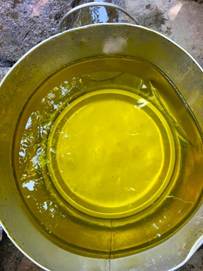
Carcinogenic chromium plume threatens Godavari A severe toxic emergency has erupted in the Ambad area of Nashik, Maharashtra, as laboratory tests confirm that residential groundwater is contaminated with hexavalent chromium at levels more than 1,000 times the permissible safety limit. According to a recent press note by the South Asia Network on Dams, Rivers and People (SANDRP), the acute contamination is likely stemming from industrial discharge in the Ambad Maharashtra Industrial Development Corporation (MIDC) area, turning local borewell water a bright yellow.
Sindoori, a small river Amid the clamour surrounding large rivers, countless small streams like Sindoori often go unnoticed. Yet, the geography, livelihoods and human emotions of rural communities that depend on them are undergoing profound changes. (Shirish Khare)
Goa’s Mandovi river full of faecal coliform The Mandovi river in Goa capital Panaji has been found to have high faecal coliform levels, beyond the permissible limit, at all the sampling points in a study, an interim report by the Goa State Pollution Control Board (GSPCB) has flagged before the High Court of Bombay at Goa. In fact, samples collected at all 22 points were found to be exceeding the permissible limit, it added.
The High Court of Bombay at Goa is hearing a suo motu petition on pollution in Mala lake after hundreds of dead fish were found floating in the waterbody earlier this year. The High Court had, a few months ago, proposed to expand the scope of the petition to include the Mandovi river line area in order to remedy the water pollution.
Mandovi River, which flows through Goa’s capital Panaji, is considered a lifeline for the coastal state. Six offshore casinos are also anchored in the river.
NGT notices over pollution in Thenpennai river Flaying Karnataka officials for wilful disobedience and non-compliance with its orders to prevent pollution of the Thenpennai River, the NGT has sought individual explanations from authorities concerned. Exercising powers under the NGT Act, 2010, the Tribunal has ordered notices to the Karnataka chief secretary, the Bengaluru Water Supply and Sewerage Board (BWSSB) chairperson, and the heads of the forest and municipal administration departments, directing them to explain the non-compliance before the next hearing on Nov 11.
Bengaluru’s toxic froth is now choking Tamil Nadu’s Thenpennai River. The national green tribunal slams Karnataka for releasing 1,329 MLD of sewage into the river, orders ‘strict action’.
NGT has directed the Karnataka govt to prevent untreated sewage discharge into the… pic.twitter.com/cu1nFx5jAd
The case was taken up suo motu by the Tribunal following reports of frothing (chemical foaming) in Thenpennai river in 2020 and the presence of toxic foam in Hosur after surplus water discharge from Kelavarapalli dam in 2024. The Thenpennai river, called Dakshina Pinakini in Karnataka, enters Tamil Nadu through Kodiyalam Check Dam – an upstream point of Kelavarapalli dam.
Ensure plastic-free Pushkarams: PCB Chairing a video conference on Oct. 23 with company representatives and officials, Krishnaiah stressed the need for advance planning to manage plastic waste, ensure adequate drinking water supply and promote eco-friendly alternatives during Pushkarams. He suggested adopting environmentally friendly packaging made from plant-based and paper-based materials, setting up drinking water dispensing stations and encouraging devotees to use reusable bottles. The APPCB chairman directed beverage companies to submit detailed action plans within 15 days. He said protecting the Godavari River from plastic pollution required coordinated efforts by government, industries and local bodies.
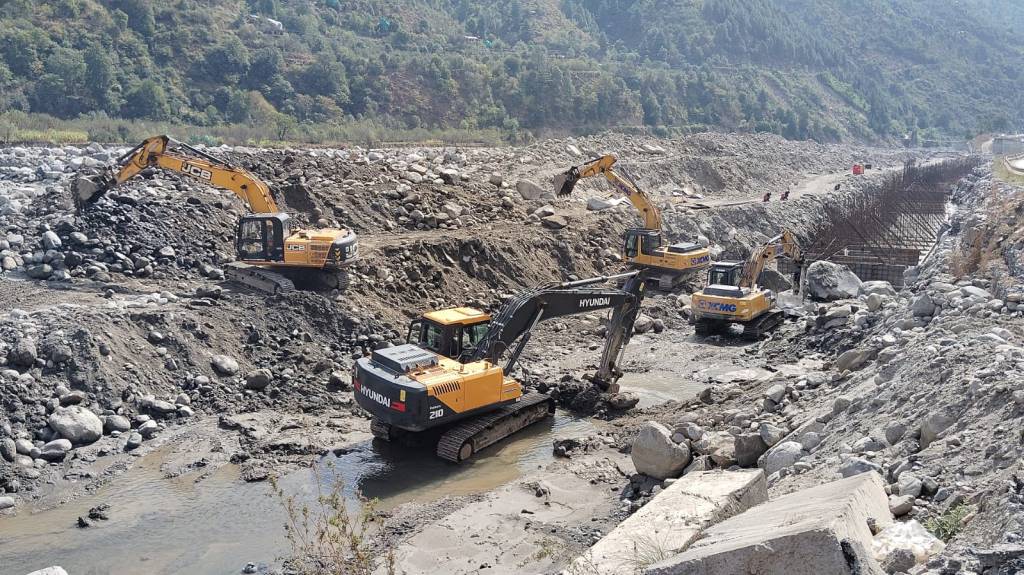
Kullu residents challenge NHAI’s retaining wall in Beas On Oct 19, the Public Action Committee (PAC) Mattewara Sutlej served a legal notice to the NHAI, the Union Environment Ministry demanding an immediate suspension of Reinforced Cement Concrete (RCC) retaining wall construction within the active riverbed and along the banks of the River Beas in Kullu district. The notice, accompanied by photographs taken on Oct 18, raises a deceptively simple question: just because a road needs protecting, does that mean a river must be concreted?
The Concerns: The PAC’s notice lays out a detailed case. Construction within the active river channel, it argues, interferes with the natural movement of water and sediment, alters channel morphology, obstructs flood conveyance, increases erosion at adjoining locations, and aggravates downstream flood risks.
Image Source & Credit: Guman Singh, HNA
The notice calls upon the authorities to: Suspend the RCC construction within the riverbed and along the banks immediately, ensuring compliance with judicial and environmental mandates before proceeding further. Furnish a complete, point-wise reply with supporting documents within seven days.
Provide a copy of the joint inspection report and the decision taken on the committee’s complaint. Remove all illegal construction from the riverbed and banks, and ensure restitution of the waterbody as per law.
The notice also warns that if work continues in the face of these concerns, the PAC reserves the right to approach the NGT seeking interim protection, independent expert assessment, disclosure of project records, and restoration of the affected environment.
₹99-cr wall along Yamuna stretch The Delhi government on Oct. 23 approved projects worth ₹622 crore to strengthen the Capital’s flood-control and drainage infrastructure, including a ₹99-crore reinforced concrete wall along a vulnerable stretch of the Yamuna and three biomining projects worth ₹260 crore to scientifically process and dispose of silt removed from drains.
The proposed wall, however, has drawn criticism from environmental activists, who warned that it could restrict the river’s natural flow without addressing the underlying causes of rising flood risks. Bhim Singh Rawat, SANDRP, described the wall as a “half-baked measure” that failed to address the underlying causes of rising flood risks. He called for construction to be halted until ongoing topographic and bathymetric surveys of the river are completed.
An analysis of the 2022, 2023 and 2025 floods indicated a significant change in the Yamuna’s flooding pattern, Rawat said. Despite peak flood volumes at Hathnikund Barrage being comparatively lower than during the historic 1978 flood, Delhi experienced unexpectedly high water levels, raising concerns about the river’s reduced capacity to carry floodwater, he said.
Rawat attributed the potential reduction in the river’s flood-carrying and absorption capacity to structures such as bridges and barrages, as well as encroachments and construction on the floodplain. Without studying and addressing these factors, a flood comparable to that of 1978 could trigger a major disaster in the Capital, he warned.
He said better desilting and silt disposal were routine measures and called for a sustainable silt management policy. Diwan Singh, convener of Yamuna Satyagraha, echoed the concerns. “They are trying to cage Yamuna which is not in sync with its natural flow,” he said, adding that attempts to control the river through bridges, barrages and walls risked turning it into a canal.
Will Yamuna get its Sabarmati makeover? Delhi is planning to develop a Sabarmati riverfront-like project along the Yamuna in two phases, with plans to create large parks, cycle tracks, open spaces and sports facilities along the river. The 52-km stretch of the Yamuna in Delhi will be divided into two phases, with Wazirabad serving as the midpoint.
Delhi water minister Parvesh Verma said the government has initiated the process of signing a memorandum of understanding (MoU) with the Sabarmati Riverfront Development Corporation Limited (SRFDCL), which will provide technical guidance for the project.
“We have initiated the files for signing an MoU with the Sabarmati Riverfront Corporation. They will guide us in overcoming the hurdles encountered during the execution of the Sabarmati project and help us with the no-objection certificates (NOCs) and infrastructure development required for a similar riverfront along the Yamuna. We are moving ahead, and a consultant is being hired to execute the project,” Verma said. The minister said the project would be implemented in two phases. The first phase will cover the stretch from Palla to Wazirabad, while the second will extend from Wazirabad to Kalindi Kunj.
Froth returns in Yamuna Bhim Singh Rawat, of SANDRP, said that low temperatures and the stabilisation of froth were among the factors behind the intensification of foam formation. However, he said, the phenomenon reflected the extremely poor state of the Yamuna.
The DJB will initiate the spraying of chemical defoaming agents in the coming weeks to control froth formation ahead of the Chhath festival. However, there have been controversies over its use. Rawat said that attempts to spray defoaming agents were merely an effort to treat the symptoms. “The reality is that the river water is extremely polluted and the river is ecologically dead at this point. From the rampant use of surfactants to industrial waste, the problem has only become more aggravated over the last decade,” he added.
Animal waste, garbage in city’s raw water canal Flagging the presence of domestic garbage and animal waste in the Munak Canal, the Upper Yamuna River Board (UYRB) has directed Delhi govt to restrict access to the system that carries the raw water provided to 60% of the Capital’s residents. A senior govt official on Oct. 20 said that board members inspected the Haiderpur Water Treatment Plant (WTP) and nearby areas, finding the canal’s condition to be highly unhygienic. The water contained large amounts of refuse and a significant quantity of animal dung, said the official, adding that “open defecation is also prevalent along the Bawana belt.”
Last year, a report by the SANDRP flagged several polluting activities taking place along the Munak canal, particularly in the Bawana region. This included open defecation along the canal slopes, industrial waste dumping and burning, the build up of garbage heaps and cattle dung.
HM launches Rs 8,941-cr push to stop sewage Launched from the Najafgarh area, the package includes 10 projects worth Rs 2,827.11 crore that were inaugurated and 33 projects worth Rs 6,114.11 crore for which foundation stones were laid. The government aims to complete the works over the next two to two-and-a-half years, after which it expects no untreated wastewater generated in Delhi to flow into the Yamuna through drains.
Among the major projects is a 124 MGD sewage treatment plant at Okhla, costing Rs 1,161 crore. The package also includes the upgradation of 8 existing STPs at a cost of Rs 1,041 crore. Their combined treatment capacity is expected to increase from 78.2 MGD to 140.8 MGD, benefiting around 78.5 lakh people. Another key component is the construction of 29 decentralised STPs and sewage pumping stations in Outer Delhi at a cost of Rs 3,113.67 crore.
JICA projects to boost rejuvenation The combined total cost of the four JICA-assisted facilities is INR 1810 crores approximately. JICA-assisted projects:– Okhla Wastewater Treatment Plant (564 MLD). India’s largest wastewater treatment plant, and the single biggest contributor to cleaner water in the Yamuna. Rithala STP (184 MLD) and Kondli STP (205 MLD). Rehabilitated and upgraded sewage treatment plants in two of Delhi’s major drainage zones, raising the quality of treated effluent reaching the river. Chandrawal Water Treatment Plant (477 MLD).
Of Delhi’s 37 existing sewage treatment plants, 28 have been upgraded over the past one-and-a-half years, he said. However, a gap of 250 MGD remains in sewage treatment capacity, for which new plants are being constructed. “The Yamuna’s water is still not clean today because, out of our 37 existing sewage treatment plants, we have upgraded 28 in the past one-and-a-half years. But there is still a gap of 250 MGD in sewage treatment capacity, for which new plants are being constructed,” Verma said in a statement.
RIVERS BIODIVERSITY
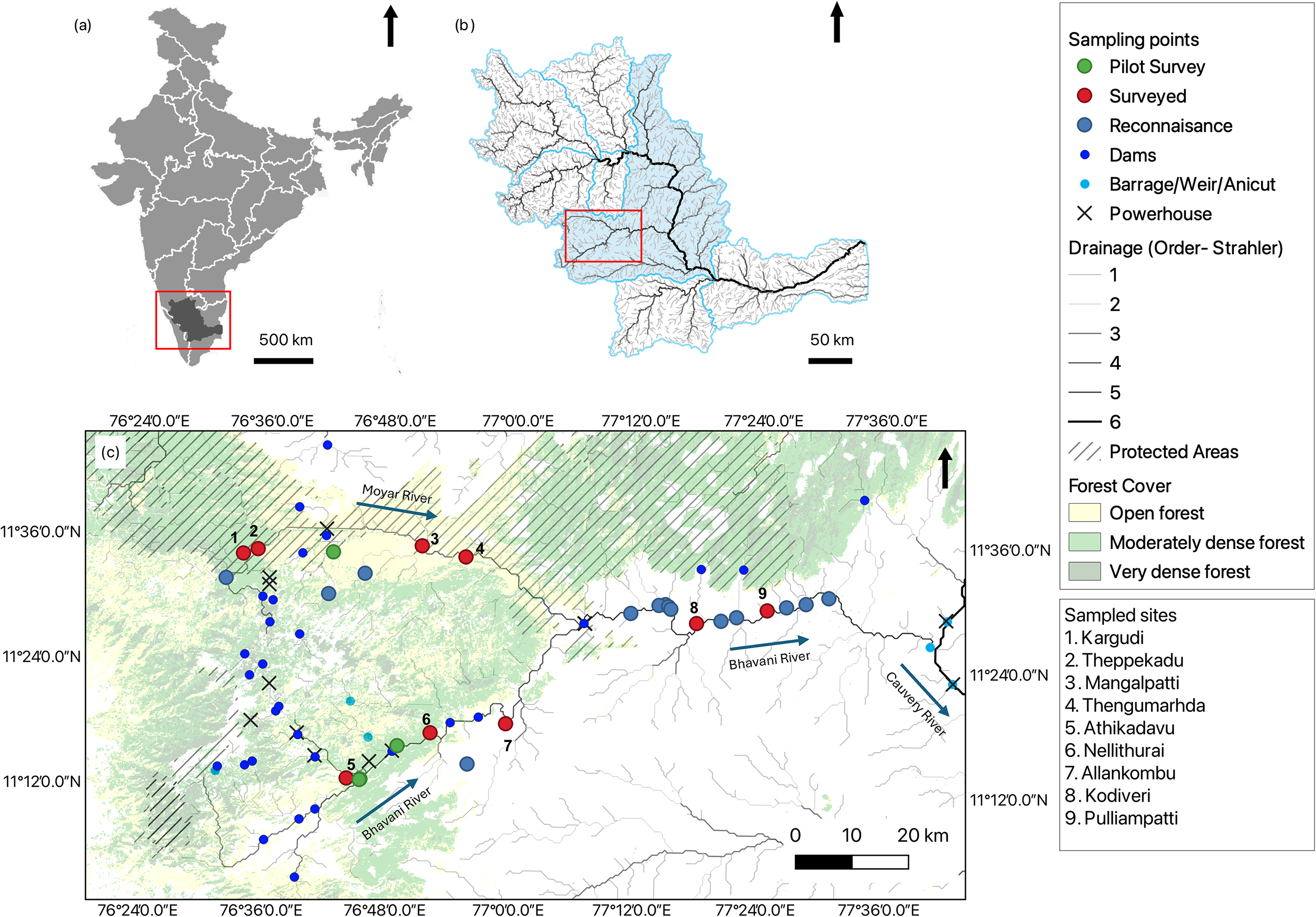
Understanding riparian health through multi-metric indicators -Rivers are complex, living ecosystems bound to the land and passing through diverse landscapes. Traditional river monitoring in India has largely focused on basic water chemistry and flow measurements, often ignoring the broader biological health of the surrounding flora and fauna. To bridge this gap, an international team of researchers from the Wildlife Institute of India, the University of British Columbia, Canada and the Salim Ali Centre for Ornithology and Natural History has successfully adapted a suite of multi-metric health indicators. They tested the new indicators on the Moyar and Bhavani rivers within the Cauvery watershed in southern India. By evaluating how plants, fish, and land use respond to human pressures, the study offers a more holistic blueprint for tracking and restoring tropical river ecosystems.
-The researchers found a clear decline in ecological health as rivers flowed from protected, forested upstream segments into human-dominated, unprotected agricultural zones downstream. Protected areas boasted higher numbers of native and specialised fish species alongside superior canopy cover. Downstream areas, by contrast, suffered from low water depth, artificial water diversion, and an influx of non-native fish species driven by agricultural pressures and dams.
-This comprehensive approach expands river health assessments beyond single-taxon analyses. While previous studies in India have typically isolated fish communities or macro-invertebrates, this research integrates aquatic life, terrestrial plants, and land-water transition zones alongside physical habitat structures. By correlating field observations with satellite-based land cover mapping, the study bridges the gap between local reach-scale conditions and broad landscape-level perspectives.
-By showing that simple, cost-effective indices can be adapted for tropical streams, the study offers a practical framework that can be integrated into routine monitoring initiatives. Deploying these integrated assessment tools equips resource managers with the precise data needed to protect vital freshwater habitats, secure food and water supplies, and preserve biodiversity for future generations. The study can be seen here.
Kaziranga’s Shrinking Buffer: When Judicial Floor Becomes State’s Ceiling The fight over Kaziranga’s eco-sensitive zone is usually reported as a familiar collision between local livelihood and corporate tourism. That framing misses the legal mutation at its center. Assam’s proposal to replace the park’s default 10-kilometer protective regime with a buffer of roughly one to three kms is not merely a policy choice about development. It is an attempt to convert a judicially imposed minimum into an administrative maximum, and to do so before the science that is supposed to justify the new line has been disclosed. That inversion is what the Gauhati High Court is now being asked to examine in the public interest litigation challenging the downsizing. (Aaditya Bajpai)
FISH, FISHERIES, FISHERFOLKS
Cauvery’s iconic fish fighting for survival Once a prized catch for anglers, the critically endangered humpback mahseer is fighting for survival in the Cauvery, its habitat threatened by altered river flows, poaching and competition from introduced species. Conservationists are racing to protect the river giant.
Biodiversity register reclaiming erased Kerala fisher knowledge Friends of Marine Life founder Robert Panippilla said indigenous knowledge of local species and information provided by 69 knowledge holders were removed from a Kerala marine biodiversity register, prompting the fishing community to document and publish its own findings.
SAND MINING
Keralam govt move to permit sand extraction in 17 rivers Environmental activists have expressed concerns about the impact of the Keralam government’s reported decision to permit extraction of 1.7 crore tonnes of sand from 17 rivers across the State from December 2026. Functionaries of the Society for the Protection of the Environment, Kerala (SPEK) say that although this is presented as a flood mitigation step, no EIA seems to have been conducted. SPEK president K. Koyatty and secretary K.K. Devadasan point out that it could also serve as a pretext for indiscriminate extraction of sand from all rivers and streams. The claim that dredging silt from a river prevents flooding lacks clarity, they say.
Assam maps sand, stone mining zones across 35 districts The Assam government has prepared District Survey Reports covering 35 districts to identify areas where sand and stone mining can be carried out legally, Forest and Environment Minister Jayanta Malla Baruah said on Oct. 24. The reports, prepared by experts, identify suitable locations for extraction, taking into account the demand for construction materials amid the state’s ongoing development activities. The government aims to use the findings to facilitate regulated mining and curb illegal extraction.
URBAN LAKES, WETLANDS
One more road proposed alongside Bengaluru’s Hebbal Lake The GBA has published a circulation plan for the Greater Bengaluru Local Planning Area, inviting objections and suggestions from the public. The exercise aims to expand the road network to improve traffic flow across the city.
The concern, however, is that the proposed route passes through the lake bund area.| Photo Credit: The Hindu
URBAN WATER
Gurgaon’s 80% dug wells choked with muck, run dry According to a survey, 257 of 321 wells — 80% — documented across three blocks were inactive. The survey conducted in 2025 over a year found that Pataudi had the highest proportion of inactive wells, with 84 of the 88 documented structures lying unused. In the city, 100 of 136 wells were inactive, while Sohna had 73 inactive wells among 97 documented.
The study has raised questions about whether these neglected structures can be revived to help recharge groundwater. Besides the three blocks, Farrukhnagar has 103 wells, of which 74 are inactive, according to an expert. The survey by GuruJal is part of Wells of Gurgaon: Echoes of water, echoes of time.
DROUGHT 2026
Telangana prepares for drought Telangana has preliminarily identified 358 drought-affected mandals, with critical groundwater levels in 324 and reservoir storage at 170 TMCft against 470 TMCft capacity. The government plans coordinated drought mitigation measures and will submit its list to the Centre by October 31.
Decline in reservoir levels Water storage in 178 reservoirs falls to 66.70% of capacity, with several dams in southern India, Maharashtra and Gujarat reporting particularly low levels
MONSOON 2026
Telangana faces 95% rainfall deficit The Northeast monsoon has brought almost no rain to Telangana so far this month. District-wise data for October 1 to 22 showed that the state received an average of 3.5 mm of rain against the normal 74 mm, a 95% deficit, amid the possible impact of El Nino. Under the Telangana Planning Department’s classification, 18 of the state’s 33 districts are categorised as “Large Deficient”, while the remaining 15 fall under the “No Rain” category. Nine districts have not recorded a single millimetre of rain this month: Mancherial, Nizamabad, Jagtial, Peddapalli, Jayashankar Bhupalpally, Karimnagar, Rajanna Sircilla, Sangareddy and Siddipet. Another 17 districts have recorded less than 1 mm of rain.
Between June 1 and October 22, the state received an average of 618.8 mm of rain against a normal of 814.5 mm, a deficit of 24 per cent, or about 196 mm. Of the 33 districts, 22 are officially classified as deficient, accounting for two-thirds of the total, while the remaining 11 are classified as normal. No district recorded surplus rainfall.
CLIMATE CRISIS
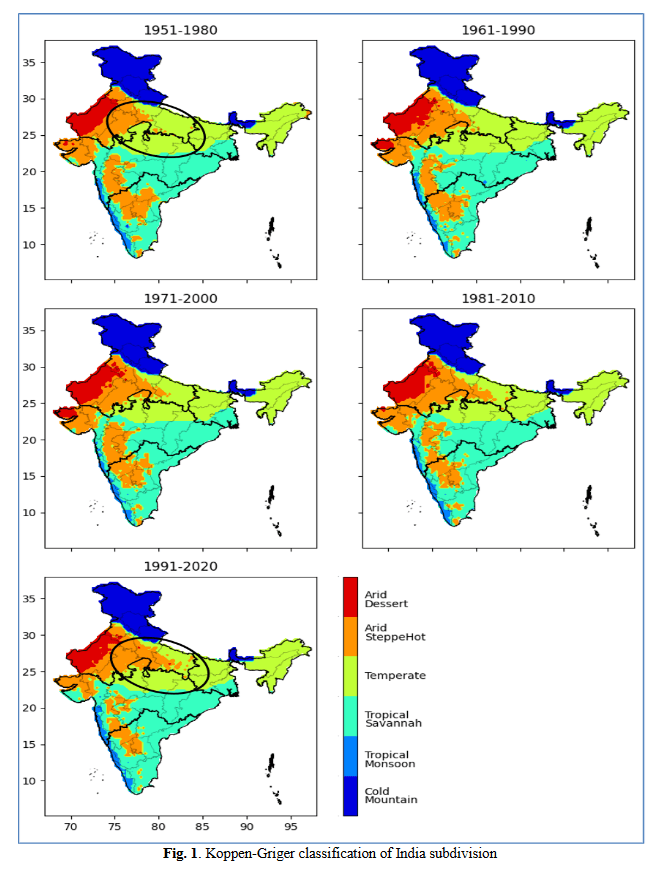
IMD Study: In last 70 years, North has become drier, South wetter A new IMD study finds that northwest India has turned drier, with its dry climate zone expanding from about a quarter to one-third of the total geographical area, whereas the south peninsula became wetter due to a rise in overall quantitative rainfall over the past seven decades. The findings, published in the IMD’s peer-reviewed journal Mausam, note that the dry zone that once ended in western UP is now extending into the east of the state, with the scientists warning the change could affect paddy cultivation in the north.
In northwest India, the hot semi-arid zone grew from about a quarter of the region’s area in 1951-1980 to a third in 1991-2020, while the temperate zone shrank from about a quarter to less than a fifth, roughly 7% of the region moved into the drier zone as temperatures rose and rainfall declined. It said peninsular India, on the other hand, reported shrinking of its hot semi-arid zone from about 30% of the region to 16%, and most of that land moved into the tropical savannah zone, which now covers three-quarters of the peninsula, a change the authors attribute to rising rainfall over southern India.
“Within these broader shifts, Marathwada and west Vidarbha in Maharashtra moved into the hot semi-arid zone, and the tropical monsoon zone extended along the Konkan coast, coastal Karnataka and Kerala,” said the study, conducted by scientists from IMD and Indian Institute of Tropical Meteorology. “When we compared India’s climate map decade by decade from 1951 to 2020, the clearest change was in the north, where the hot, dry zone has pushed east into Uttar Pradesh, and because this is one of the country’s most important farming regions, the timing of sowing and harvesting there needs to be watched closely,” said Ananya Karmakar, the study’s lead author.
DISASTERS
Major earthquake risk in Uttarakhand: IIT-Bombay study The study, led by IIT-Bombay and published in the journal Earth and Planetary Science Letters, has found that the Main Himalayan Thrust, a major fault system associated with the ongoing collision between the Indian and Eurasian plates, is strongly locked beneath India’s Uttarakhand. This means that while the plates continue to move toward each other, a significant portion of the fault is not slipping freely, allowing elastic strain to accumulate in the surrounding rocks.
Scientists warned that the strain accumulated along a 300-km section of the fault was equivalent to that released by a magnitude 8.1 megathrust earthquake roughly once every century. However, scientists also caveated that the estimate should not be interpreted as a prediction that an earthquake of this magnitude will occur every 100 years.
POWER ISSUES
4.2% solar power remains unabsorbed in India in July, Aug Due to gaps in transmission sector, 4.2% of solar power (1.8 Billion Units) remained unabsorbed in India in July and Aug even as peak demand hit 270 GW and coal stocks dwindle. Between Apr and June, 14% of solar power output was held back. In the quarter ending in Sept, solar power generation jumped 39% and non-hydro renewables crossed 100 BU for the first time.
SOUTH ASIA
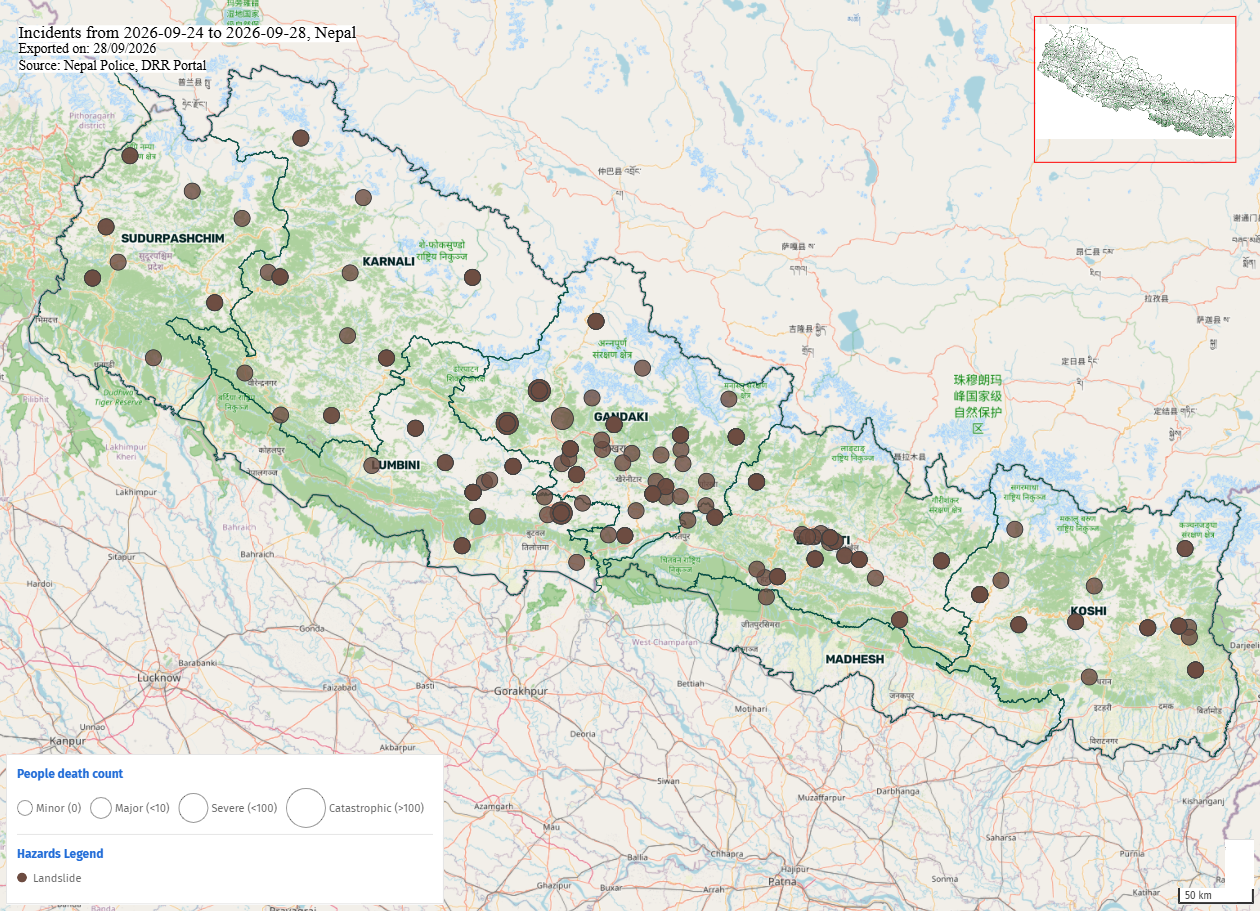
NEPAL: Landslides According to Dave Petley Blog dated Sept 28 2026, Nepal faced large number of landslides across the country starting on Sept 24. This is the map of landslides on its Bipad Portal.
Recorded landslide incidents in Nepal in the period 24 to 28 September 2026, via the Bipad portal.
There is a distinct concentration in the central part of the country. Bipad has recorded 285 distinct landslides, leading to 15 fatalities with a further three people missing and three people injured. A total of ten fatal landslides have been recorded so far.
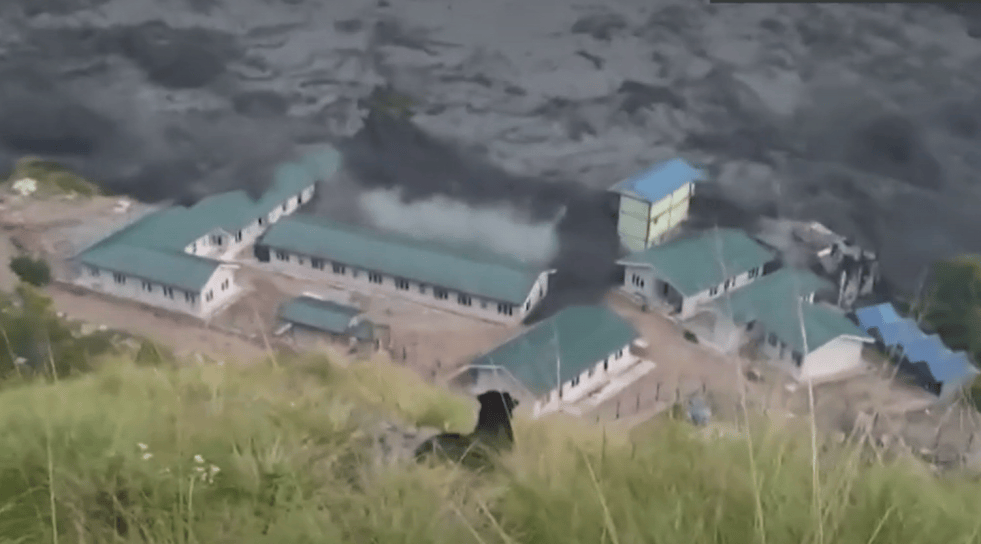
In his blog dated Oct 12 2026, Petley, while discussing the new episode of debris flow that started in Nepal on Oct 11, says: “In terms of losses, it appears that five people have probably been killed, and there has been damage to houses, roads and bridges. The video at the top of the post shows the destruction of a camp for the Budhi Gandaki hydropower project. This will be a 225 metre high dam – one wonders if this project is viable in light of events this summer.”
Nepal’s disaster is an urgent wake-up call In the article published in The Nature dated Oct 20, 2026, Christian Huggle et all (including Kavita Upadhyay of India) warn: “The unprecedented scale of the damage shows that current approaches of assessing and managing these risks have failed. Moreover, with global warming accelerating, further disasters of this magnitude are expected… But, so far, little has changed in how such hazards and risks are considered in practice.”
The authors also warn about the role of hydropower projects and other infrastructure: “Expanding development in mountainous areas is also increasing the exposure of people, settlements and infrastructure to hazards. For example, hydropower development in the Trishuli basin in Rasuwa has expanded since 2010, as has development along the road to the Rasuwagadhi–Kerung border between China and Nepal.”
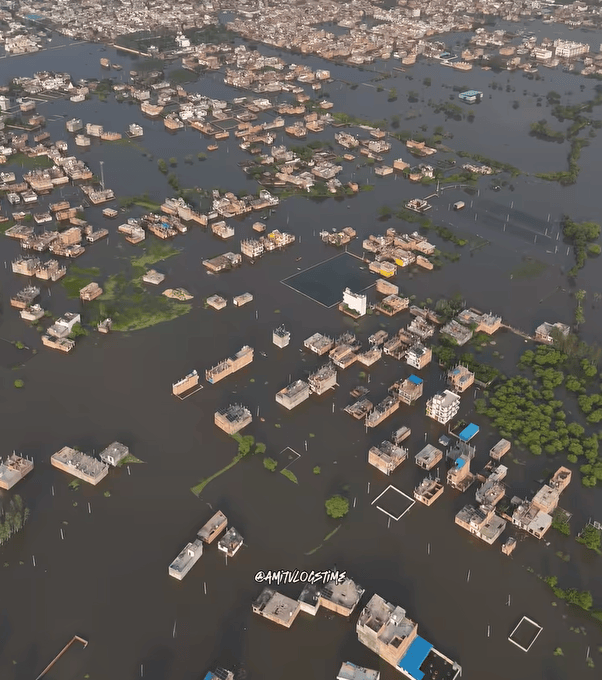
(Feature Image: A large part of residential areas witnessed severe flooding in first week of Oct. 2026 in Fazullaganj of Lucknow after heavy rains and flood in Gomti river. Source: Screenshot of FB post)
Two informative reports by Amal Chandra and Venkatesh Dutta in Down To Earth this week have once again highlighted serious gaps in India’s disaster management system. While our forecasting and response have improved in some cases, the number of disasters has also increased sharply. We often fail to understand the exact chain of events and remain reactive until the last moment. A key problem is that our system continues to focus more on response than prevention and lacks a holistic approach to disaster risk reduction.
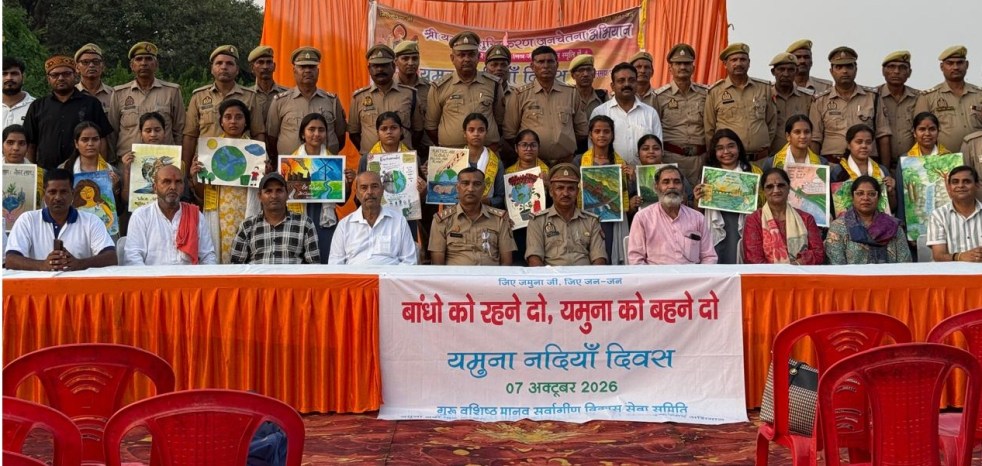
(Feature Image: Marking Yamuna Rivers Day on Oct. 7 to commemorate Yamuna crusader Manoj Misra’s 72nd birth anniversary, members of Nadi Mitra Mandli, school students and Home Guard personnel gather in Agra to discuss the importance of the Yamuna’s tributaries and raise awareness about their disappearance.)
The agreement to build the 236-m high Kishau dam on the Tons river raises serious concerns about the future of the Yamuna. Tons is a larger river system in upper basin and plays a vital role in sustaining Yamuna’s ecosystem. Ironically, the ₹15,000-cr project is being promoted in the name of Yamuna rejuvenation and being justified with baseless ‘rain water flowing in waste’ argument. These unconvincing and contradictory claims clearly underline the basic fallacy in the govt’s dam-building approach.
(Feature Image: Screengrab of BBC video report showing flood surge in Budhi Gandaki river damaging construction camp of 341 MW Budhigandaki HEP at Salleri in Gorkha district, Nepal in morning hours of Oct. 11, 2026)
The Budhi Gandaki river corridor in Nepal’s Gorkha district has witnessed a flash flood disaster causing extensive damage to public and private property. The flood reportedly began around 4:00 am on October 11, 2026, following the sudden breach of a landslide dam in a tributary of the Budhi Gandaki.
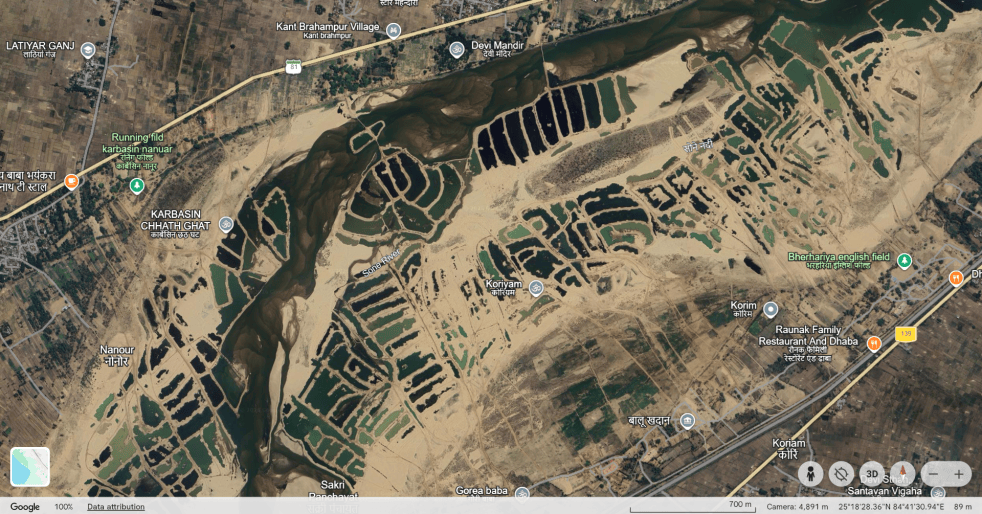
(Feature Image: Google Earth May 2025 imagery showing Sone riverbed ravaged by excessive mechanized sand mining activities near Paliganj in Bihar)
In a significant development last week, the Supreme Court has expanded its illegal sand mining case from the National Chambal Gharial Sanctuary to rivers across India. For over six months, the apex court has been hearing the matter and issuing directions to state governments of Rajasthan, Madhya Pradesh and Uttar Pradesh. However, the directions issued so far are yet to be fully implemented.
Laboratory testing has confirmed acute toxic contamination ongoing in Ambad, Nashik, where residential borewell water has turned bright yellow, likely due to industrial hexavalent chromium [Cr(VI)] from the Ambad MIDC.
Local activists Roshan Kedar, Rajesh Pandit, their team and volunteers highlighted the issue and have been consistently following up with residents. Parineeta Dandekar, SANDRP visited the site and got the groundwater the sample tested in an accredited lab.
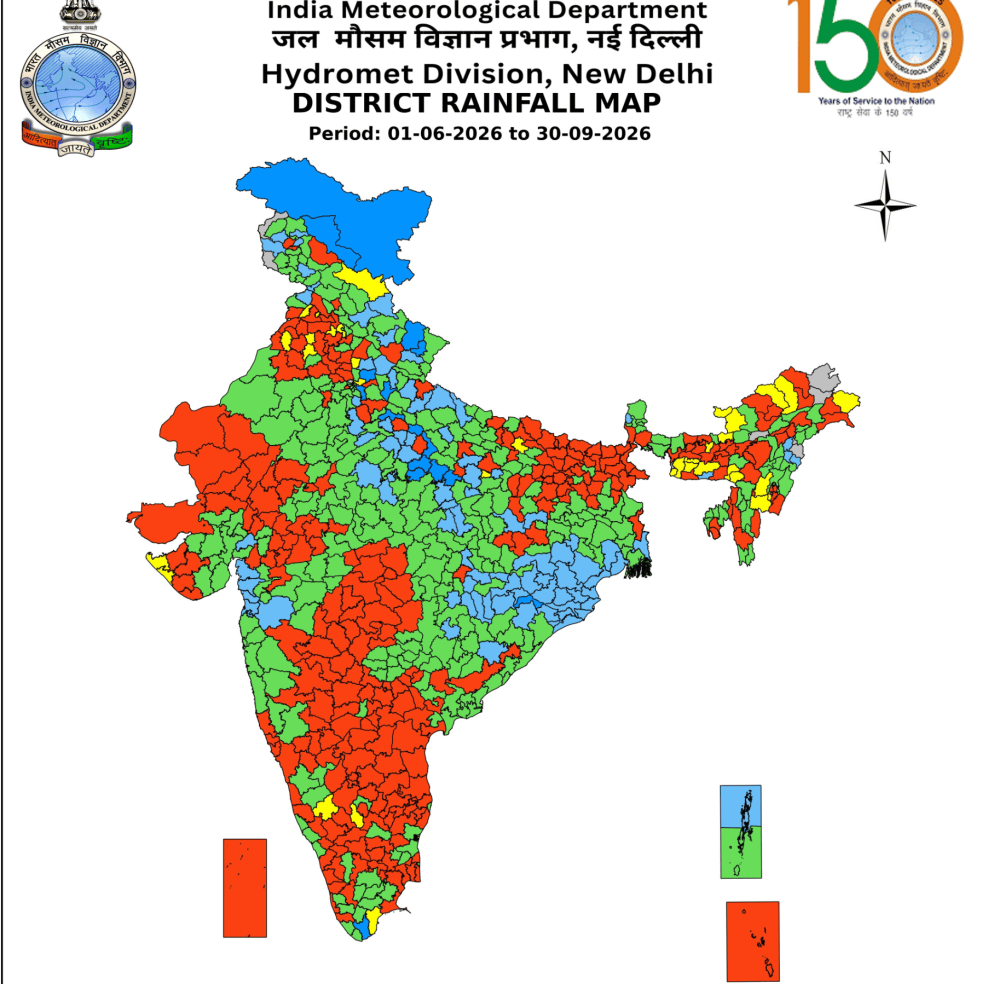
An analysis of the daily district wise rainfall data from India Meteorological Department (IMD) for July 2026 shows that there were 844 (718 in July 2025, 914 in July 2024, 855 in July 2023, 809 in July 2022 and 717 in July 2021) instances when district rainfall of a day was above 50 mm.
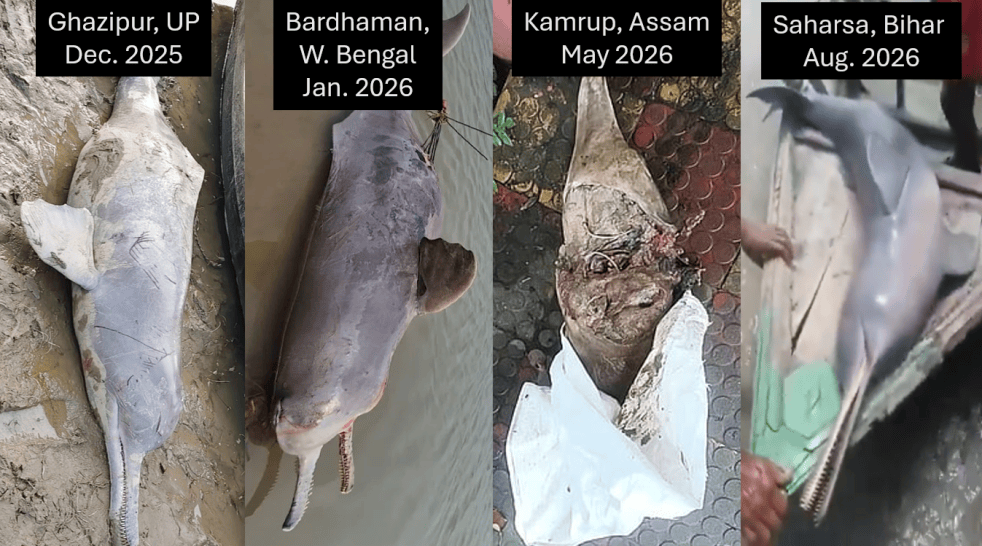
(Feature Image: Collage of Gangetic dolphin corpses found in UP, Bihar, Assam & West Bengal between Dec. 2025 & Aug. 2026.)
Marking the National Dolphin Day-Oct. 5, 2026-, this report highlights the deaths, threats and relevant developments concerning the national aquatic animal. In last one year, we have found reports of at least ten Gangetic dolphin deaths, including six in Uttar Pradesh, two in West Bengal, and one each in Bihar and Assam. The reported death toll is higher than in the previous two years, indicating continuing concerns over their survival.
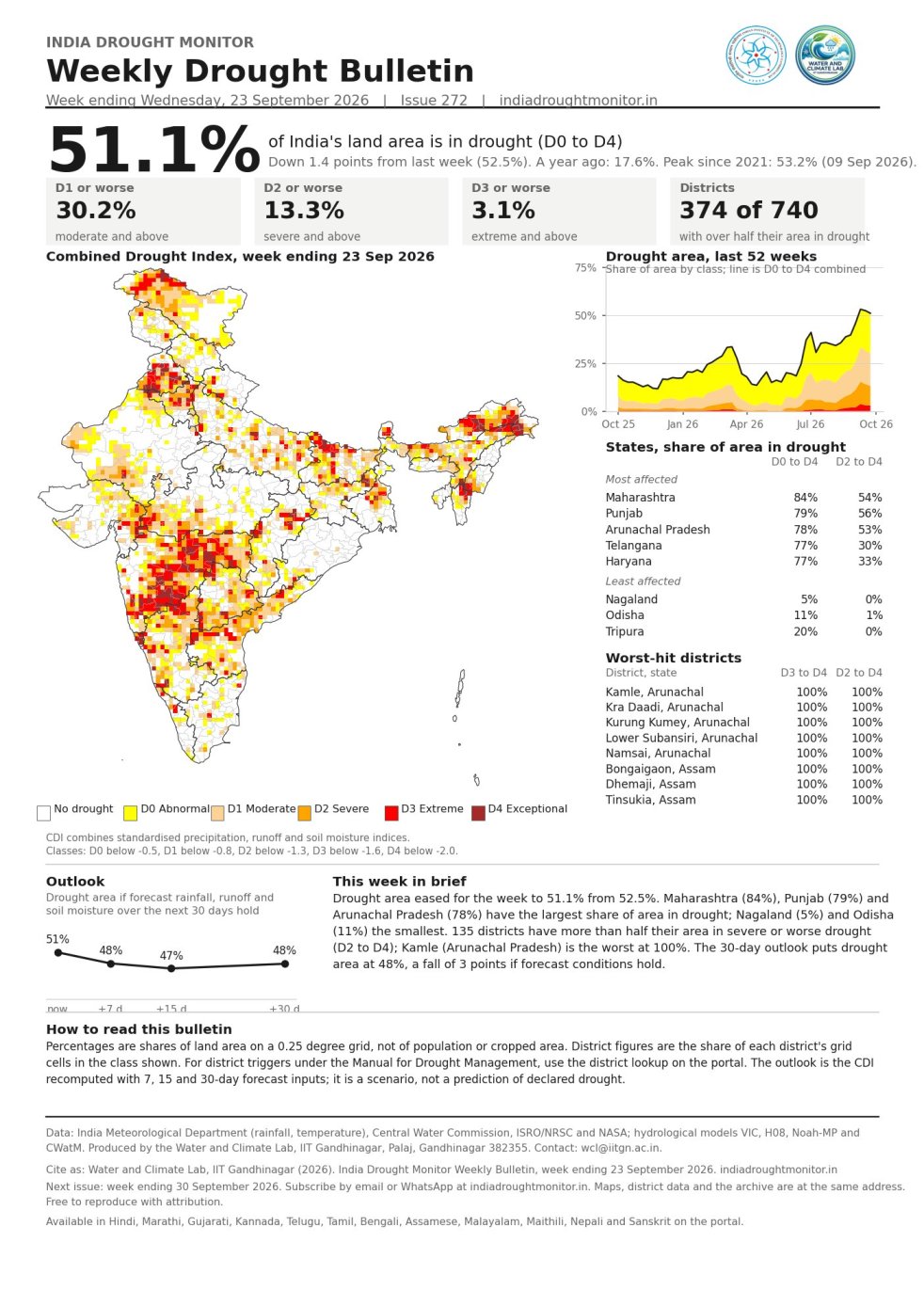
(Feature Image: Weekly drought monitor map dated 23 Sept. 2026 shows drought condition in India. Credit: Vimal Misra/ Drought Monitor India )
The DRP issue this week seems to have one central theme, connecting the various parts: Deficit monsoon leading to reduced reservoir levels, increased pollution, mass fish deaths and announcements of unprecedented droughts in more than one state. Since it was known to be a super El Nino Year and even IMD had predicted (though ratgher conservatively) deficit monsoon, the ultimate deficit of 12.6% in SW Monsoon rainfall may in fact seem like bit of a relief. This was largely thanks to unexpected above average rainfall in the wettest month of SW Monsoon, July, largely due to favorable Indian Ocean Dipole.